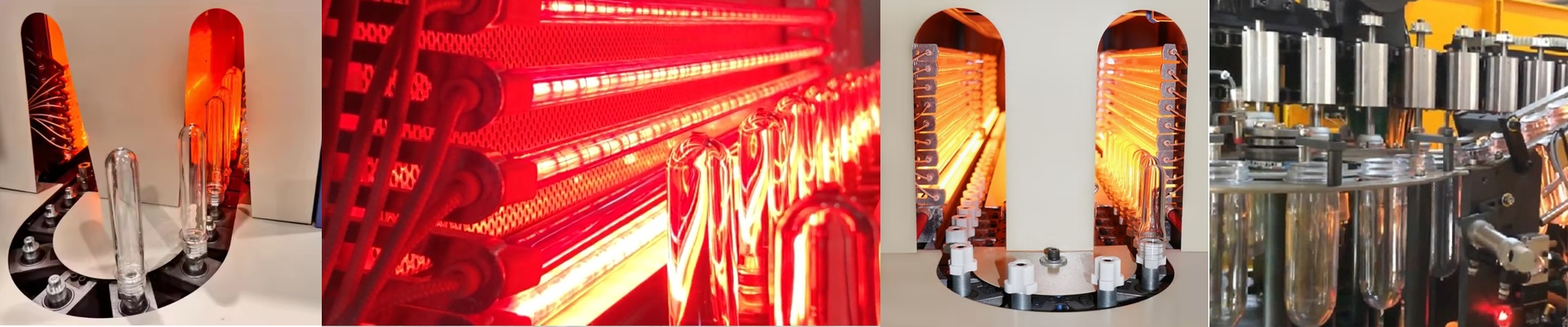
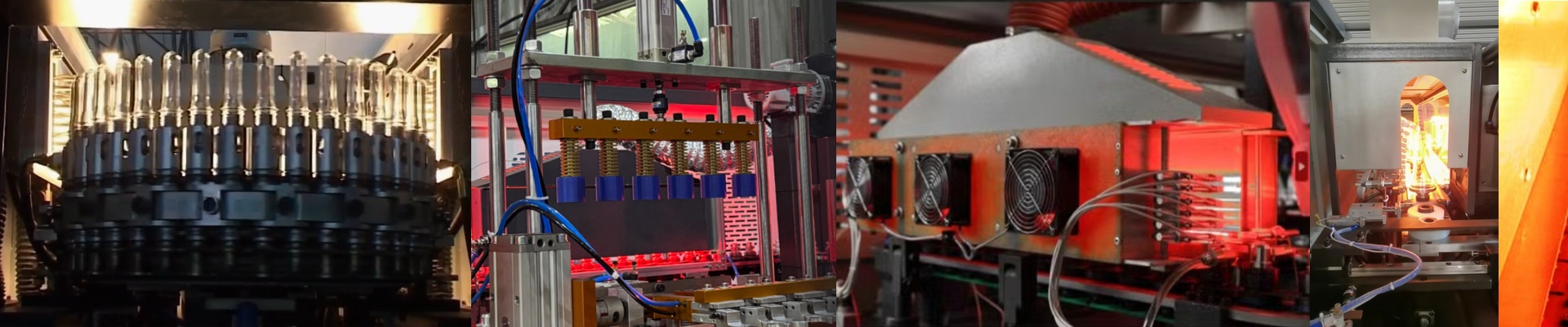
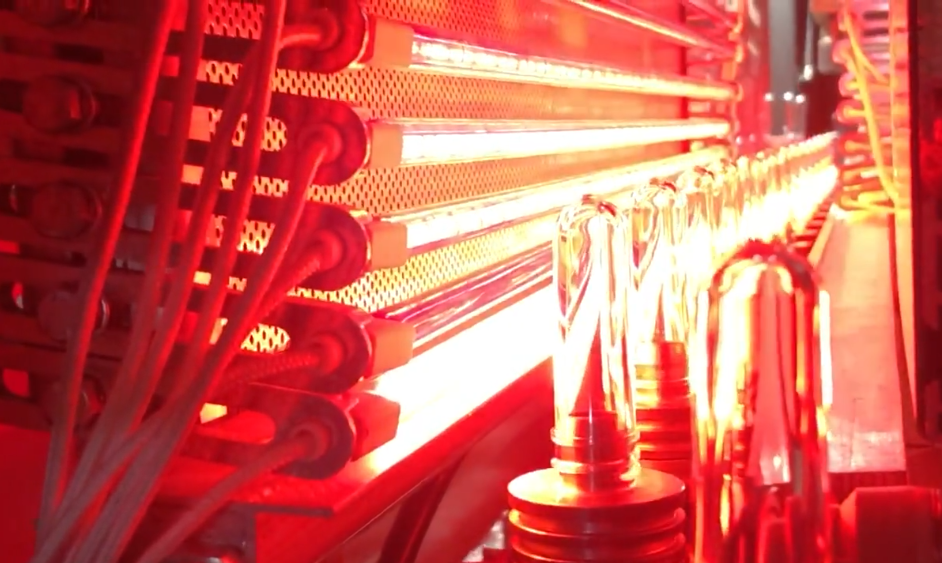
On the blow molding line, uneven preform heating is the kind of problem that quietly eats up uptime and yield. One hotspot, one cold zone, and you’re staring down weak bottles, blown rejects, and a line that keeps stalling. The fix starts right in the heating tunnel, with the right infrared quartz lamp.
What matters, technically
We build industrial quartz lamps for blow molding machines, and they’re designed around short-wave infrared output and tight thermal control. Typical ratings run 1.5 kW to 3.0 kW, 120 V or 240 V, with standard R7s connectors so they drop in clean. The quartz envelope handles fast heat-up and holds stable output through repeated thermal cycles, and the internal filament layout keeps the emitted spectrum matched to PET preforms. Output is repeatable, and the lamp geometry fits OEM heating tunnels so the energy lands where it needs to.
Why it works on a real blow molder
Stretch blow molding doesn’t forgive unpredictable heating — it’s what keeps wall thickness and bottle strength in line. With consistent infrared energy, the preform surface heats evenly, and that temperature window is easier to hold. You get fewer temperature swings, more stable cycles, and less scrap from crystallization or thin spots. Energy use drops because the response is fast and the dwell is shorter, and you stop spending time chasing lamp drift.
The details that make the difference
Installation is straightforward, but alignment is not optional. Set lamp position, reflector cleanliness, and focal distance to the machine manual, or you’ll lose uniformity in a hurry. Handle quartz with clean gloves and keep skin off the glass — fingerprints will come back to haunt you. And plan for thermal shock: warm the lamp up under control instead of slamming it to full power. If your blow molder runs 24/7, treat lamp replacement as planned maintenance. Schedule it in a maintenance window so output stays stable and you don’t get blindsided mid-run.